If you’ve spent a season or two making wine at home, you’ve probably already accumulated the basics: a glass or plastic carboy (the large, narrow-necked fermentation vessel), an airlock, a siphon, maybe a floor corker and a hydrometer (the tool that measures sugar levels to track fermentation progress). What you don’t need is another shrink-wrapped equipment bundle collecting dust in your garage. What you need is exactly what’s missing — the juice concentrate, the yeast packet, the clarifiers, and the sulfite tablets — without paying for gear you already own.
That’s exactly what ingredient-only wine kits solve. These are the consumable cores stripped out of the traditional starter kit format: grape juice concentrate, a calibrated yeast strain, fining agents (the compounds that help wine clarify), and sometimes oak powder or chips for flavor development. You get the recipe; you supply the vessel. For the winemaker who has already crossed the beginner threshold, ingredient-only kits can unlock real value — but not all of them are created equal. This guide compares three of the most widely available budget-tier options — Fontana, ABC (Alcohol By Choice), and Wild Grapes — so you can make the call that fits your setup, your palate, and your per-bottle cost math.
What You’re Actually Buying (and What You’re Not)
Before comparing brands, it’s worth being precise about kit anatomy. A complete wine kit — the kind sold as an all-in-one package for beginners — typically includes the juice or concentrate, all additives, and sometimes basic equipment. An ingredient-only kit is just the juice concentrate and the additive packet: yeast, bentonite (a clay-based fining agent that pulls proteins out of suspension), isinglass or kieselsol (additional clarifying agents), metabisulfite (the sulfite preservative that protects against oxidation and microbial spoilage), and sorbate (which prevents refermentation in the bottle).
What separates a $35 ingredient kit from a $120 premium kit is primarily juice volume and concentration grade. Penn State Extension’s home winemaking resources, published through extension.psu.edu, explain that most budget kits use highly concentrated grape juice that gets diluted to approximately 23 liters (roughly 6 gallons, yielding about 30 bottles) before fermentation. Premium kits use lower-concentrate or even non-concentrate juice, which preserves more of the aromatic compounds that can be diminished during the concentration process. At the budget tier, you are trading some aromatic complexity for price — and knowing that tradeoff up front is half the battle.
The other variable is the additive packet quality. Winemaker Magazine’s coverage of kit grades, available at winemakermag.com, notes that better kits include pre-measured, lab-grade additives with specific timing instructions, while entry-level kits sometimes ship generic yeast strains with vaguer protocols. For an intermediate maker who is already managing pH and SO₂ levels manually, this matters less — you can supplement a weak additive packet with your own Lalvin EC-1118 or Red Star Premier Blanc from your existing supply. But it’s still worth knowing what’s in the box before you open it.
The Three Brands, Compared
Fontana: The Volume Play
Fontana is arguably the most widely distributed budget ingredient kit on the North American home winemaking market. The line covers a broad range of varietals — Cabernet Sauvignon, Merlot, Pinot Grigio, Riesling — each at a price point that typically lands well under $50 at retail. For a winemaker churning through multiple 6-gallon batches per season, that economics argument is real.
What makers consistently report: Fontana kits are straightforward to execute. The instructions are clear, the included yeast packet (usually a reliable neutral wine yeast) gets the job done without drama, and the bentonite works as expected for clearing. Across aggregated reviews on retailer product pages, makers note that Fontana reds benefit from extended aging — a consistent theme is that wines opened at the minimum 4-week mark taste noticeably rough, while the same wine at 3–4 months softens considerably.
The tradeoff to name explicitly: Fontana concentrates sit on the higher-dilution end of the budget tier. The juice-to-water ratio means you’re working with less raw material per finished liter. For white varietals especially, where aromatic brightness is the point, this compression shows. Owners report that Fontana Chardonnay and Riesling are serviceable everyday wines but don’t replicate the floral lift of a lower-concentration kit or, obviously, a fresh juice fermentation.
For the intermediate winemaker: Fontana’s real use case is volume and consistency. If you’re making wine as a cost-reduction strategy — filling your cellar with drinkable table wine at under $2 per bottle — Fontana is a rational choice. If you’re chasing complexity, it’s a starting point that rewards supplementation. The UC Davis Department of Viticulture and Enology yeast strain selection resources, available through waterhouse.ucdavis.edu, document Lalvin 71B as a strain known for softening malic acid in reds; substituting that for the included packet, or adding a French oak spiral from your existing supply, can meaningfully move the needle on the finished wine.
Fontana
$79.95
In stock on Amazon
Check price on AmazonABC (Alcohol By Choice): The Clarity-Focused Middle Option
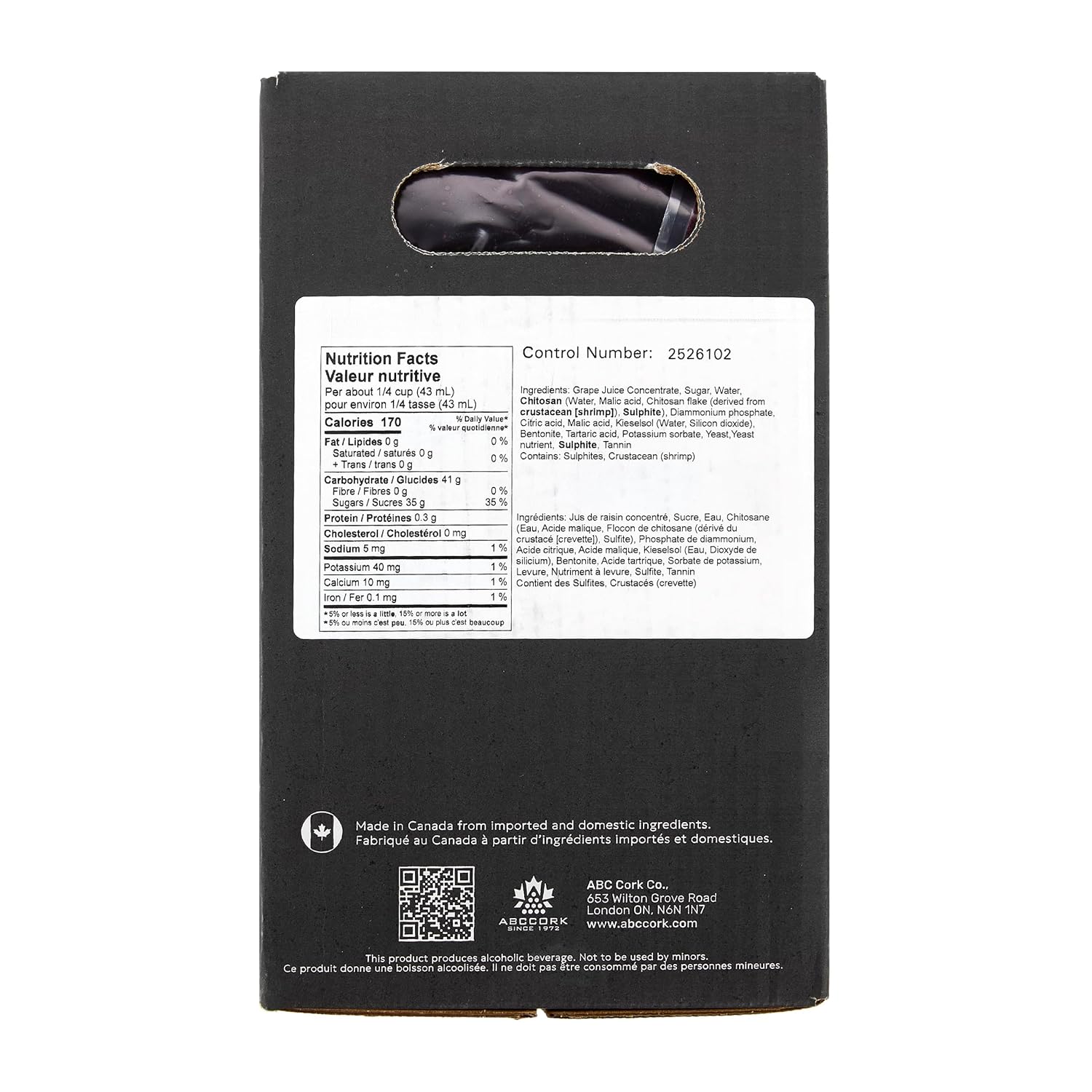
ABC kits occupy an interesting position: they’re priced comparably to Fontana but are often formulated with slightly more additive variety in the packet, including kieselsol/chitosan clearing combinations in some SKUs rather than bentonite-only systems. The BSG Handcraft Home Winemaking Product Guide, published through bsghandcraft.com, describes dual-fining approaches of this type as producing a clearer finished wine with reduced lees (sediment) at the bottom of the carboy — a characterization consistent with what ABC-format kit users report in retailer review aggregations.
What the specs suggest: The kieselsol/chitosan clearing system is a genuine formulation advantage if you’ve battled persistently cloudy wines on a bentonite-only protocol. Kieselsol (a silica-based fining agent) carries a negative charge; chitosan (derived from crustacean shells) carries a positive charge. When added in sequence, they attract and drop out a wider range of haze-causing particles than bentonite alone. For makers who are already monitoring their wines with a hand refractometer and tracking clearing progress, this is a meaningful difference.
The tradeoff: ABC’s varietal selection is narrower than Fontana’s, and availability can be patchier depending on your regional homebrew retailer. The MoreWine! General Catalog and Product Descriptions (2025–2026 edition, morewinemaking.com) has historically carried select ABC-format ingredient kits, but the brand’s distribution is less consistent than Fontana’s nationwide retail footprint.
Decision frame: If your primary frustration with budget kits has been clarity and sediment management — and you’d rather solve it at the kit level than add purchased fining agents from your own supply — ABC is worth the search. If varietal selection or local availability is the binding constraint, Fontana’s broader SKU list wins on logistics alone.
Wild
$84.99
In stock on Amazon
Check price on AmazonWild Grapes: The Regional and Specialty Option
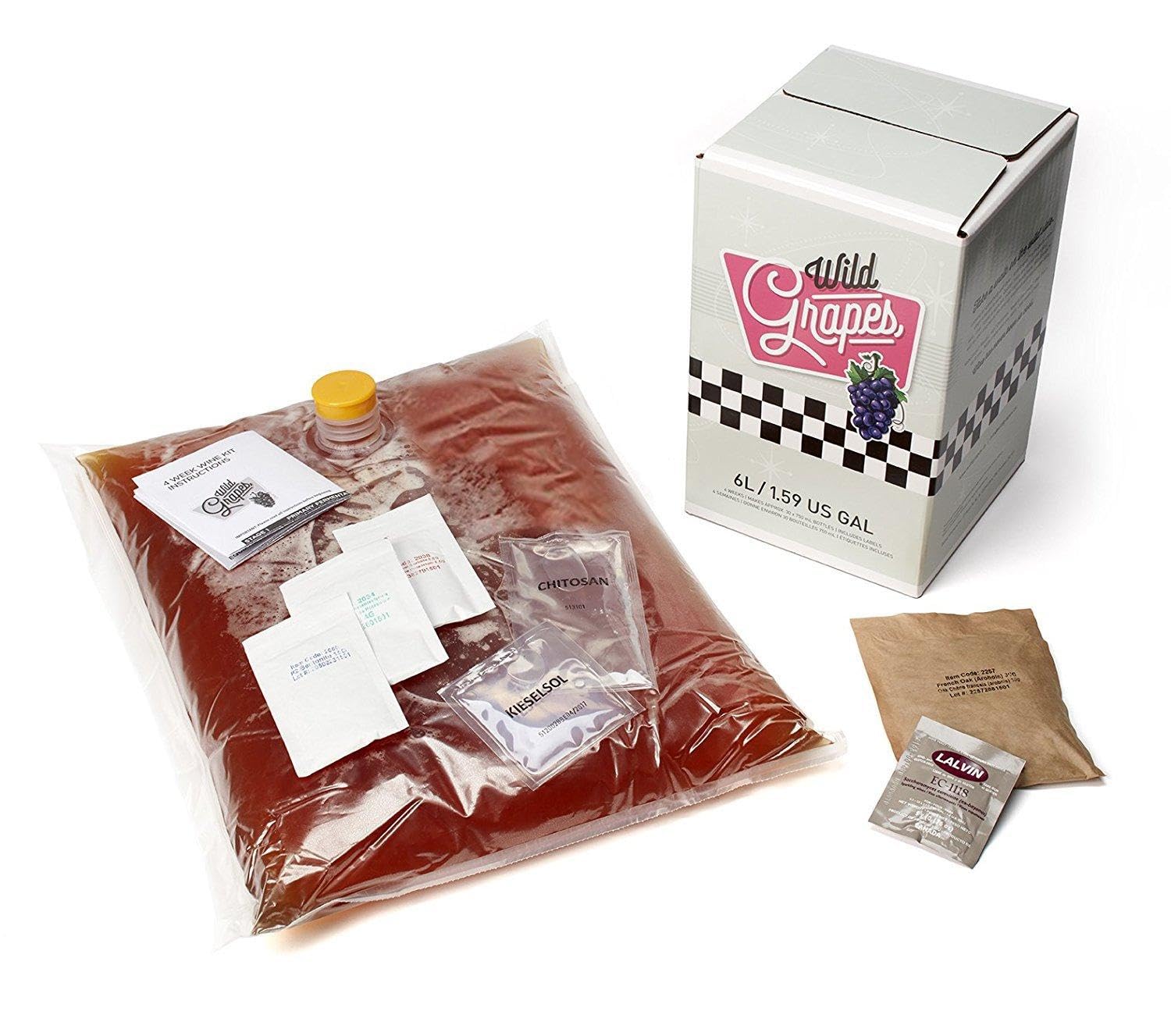
Wild Grapes kits have a different origin story from the other two. The brand positions itself around North American varietal concentrates, including hybrid and native varietals — Concord, Niagara, and regional blends — that the European-focused budget kit market largely ignores. For a maker in the Midwest or Northeast who wants to experiment with locally rooted grapes or produce wines that taste distinctly regional, Wild Grapes fills a gap that neither Fontana nor ABC addresses.
What makers note: Wild Grapes kits built around native varietals like Concord carry the characteristic “foxy” aromatic note — a distinctly grape-y quality that comes from methyl anthranilate, a compound naturally present in Vitis labrusca grapes. This is not a defect; it is the point for many makers. Winemaker Magazine, in its coverage of North American home winemaking trends at winemakermag.com, has noted that hybrid and native varietals are underserved by the commercial kit market; Wild Grapes is one of the few budget-tier brands addressing that gap directly. If you’re expecting a Bordeaux-adjacent profile from the Concord kit, you will be confused. If you want something that tastes like a specific regional tradition, that’s exactly what you’re paying for.
Their Vitis vinifera–based kits (the standard European wine grape species) are comparable in concentration grade to Fontana’s budget tier. The differentiation is genuinely in the hybrid and native options.
The tradeoff: Wild Grapes’ additive packets are described by reviewers as more minimal than the other two brands — closer to yeast-plus-sulfite with less in the fining department. For a maker comfortable sourcing their own Lalvin EC-1118 or Red Star Côte des Blancs and their own kieselsol separately, this is a non-issue. For someone who wants the full turnkey kit experience, it’s worth planning to supplement the packet before you start.
Fontana
$79.95
In stock on Amazon
Check price on AmazonBy the Numbers: Budget Kit Comparison at a Glance
| Brand | Typical Price (2026) | Yield | Clearing System | Varietal Range | Best Use Case |
|---|---|---|---|---|---|
| Fontana | $35–$50 | 23 L / ~30 bottles | Bentonite | Wide (vinifera) | Volume table wine production |
| ABC | $40–$55 | 23 L / ~30 bottles | Kieselsol/chitosan | Moderate (vinifera) | Clarity-focused batches |
| Wild Grapes | $30–$50 | 23 L / ~30 bottles | Minimal (yeast + SO₂) | Includes hybrid/native | Regional varietals, Concord-style |
Prices reflect mid-2026 retail estimates; regional variation applies. Cost per bottle assumes full 30-bottle yield.
The Decision Rule: If X, Then Y
Here’s how to read your situation against this comparison:
If your primary goal is cost-per-bottle minimization across multiple batches of drinkable table wine: Fontana is your baseline. Buy in quantity when your retailer runs promotions, supplement with your existing yeast stock — Lalvin 71B for reds, EC-1118 for anything you want bone-dry, per the UC Davis Department of Viticulture and Enology yeast strain documentation at waterhouse.ucdavis.edu — and plan to age the reds a minimum of three months before evaluating.
If you’ve had persistent clarity issues with budget kits and don’t want to troubleshoot fining agents separately: ABC’s dual-fining packet is worth the modest price premium. The kieselsol/chitosan approach is the same method recommended in the BSG Handcraft Home Winemaking Product Guide (bsghandcraft.com) for professional-scale enology applications; in an ABC kit you’re getting it pre-portioned for the 23-liter home scale.
If you want to make something that tastes distinctly American — Concord, Niagara, or a regional hybrid blend — and you’re comfortable adding your own fining agents: Wild Grapes is the only brand in this comparison offering that lane. As Winemaker Magazine (winemakermag.com) has observed in its coverage of North American kit trends, this is a genuine market gap; Wild Grapes is one of the few budget options that fills it.
If none of these match your ambition: That’s also useful information. Ingredient-only kits at the budget tier are a tool for a specific job: consistent, affordable production from a maker who already has the infrastructure. If you’re starting to think seriously about fresh juice fermentations, direct-from-vineyard sourcing, or scaling up to larger variable-capacity vessels and running 60-liter batches, the calculus changes entirely — and that’s the natural next step on the upgrade path.
For now, if the gear is already in the cellar and you need ingredients, any of these three will get juice into your carboy. The question is which tradeoffs you’re willing to manage yourself — and based on the formulation specs and the aggregated owner consensus, you now have what you need to make that call.