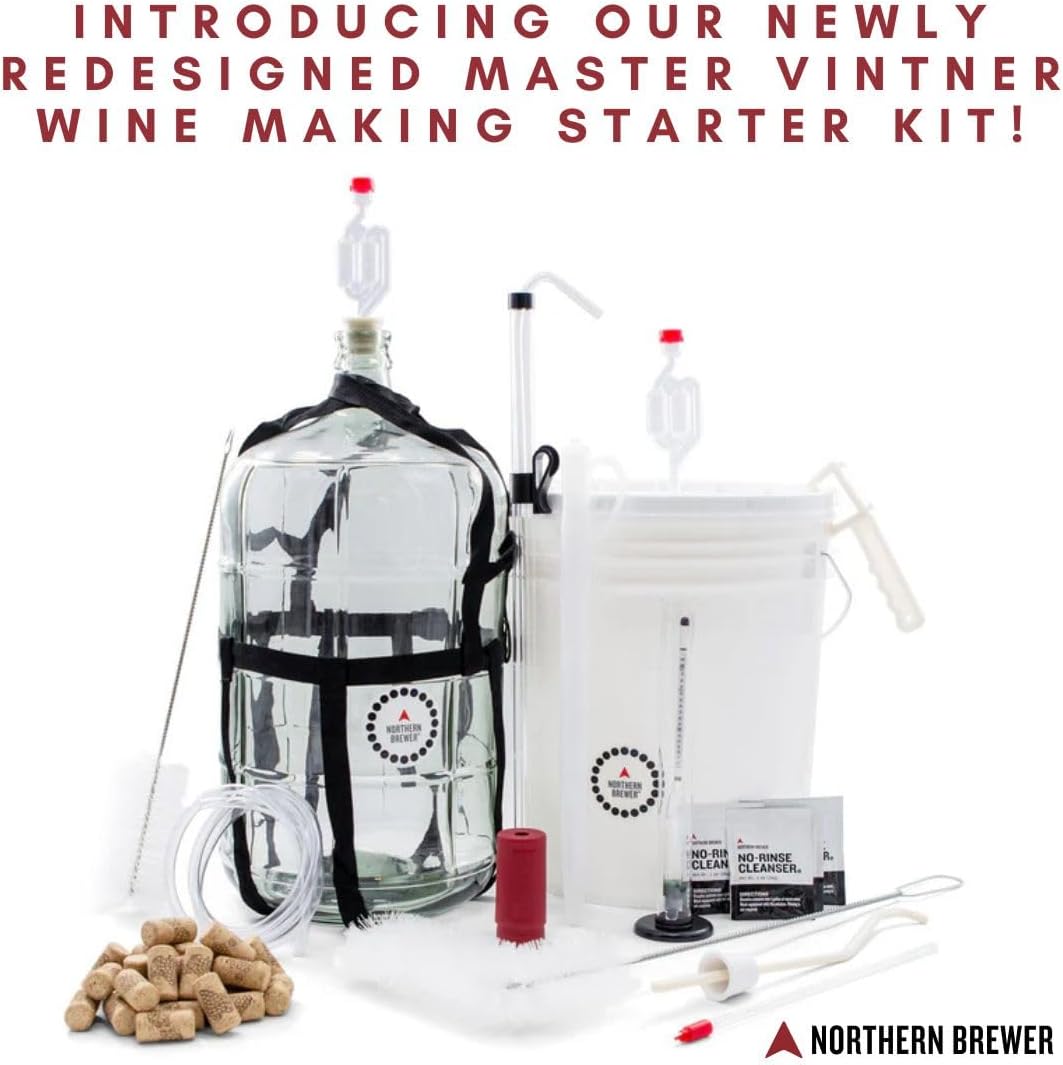
If you’ve made wine before — even one batch from a kit — you already know the basic idea: juice goes in a container, yeast converts sugar to alcohol, and after some weeks of patience (and occasional worry), wine comes out the other end. What changes at the six-gallon scale isn’t the chemistry. It’s the stakes. Six gallons fills roughly 30 standard 750 mL bottles, which means one batch can supply a season of dinner parties, holiday gifts, or serious cellar experimentation. It also means one bad sanitation decision, one neglected airlock, or one undersized piece of equipment can cost you thirty bottles’ worth of grapes, time, and money. This guide is for the winemaker who has done a batch or two and is now ready to invest in a setup that can reliably handle that volume — and grow with you.
After the first kit, most winemakers hit the same crossroads: keep buying entry-level gear piece by piece, or make a deliberate jump to equipment that matches the ambition. This article walks through what that jump looks like at the six-gallon tier — what to buy, what to skip for now, and where the real tradeoffs live.
Why Six Gallons Is a Different Animal Than One or Three
A one-gallon or three-gallon batch is forgiving in ways that six gallons is not. Headspace — the empty air gap between your wine’s surface and the top of the vessel — becomes your biggest enemy at scale. Oxygen exposure at the six-gallon level can push a wine toward acetaldehyde (a flat, bruised-apple off-flavor) or outright vinegar character within days of fermentation ending if the vessel isn’t managed correctly.
Per MoreWine!‘s winemaking guides on oxygen management, the threshold for problematic oxidation shrinks as batch value increases: a three-gallon loss is annoying; a six-gallon loss is genuinely expensive, especially if you sourced fresh grapes or high-quality juice. This is why the equipment calculus changes at this level. You’re not just buying bigger containers — you’re buying headspace control, sulfite management capability, and transfer precision.
The six-gallon math, quickly:
| Batch size | Bottles (750 mL) | Approximate fresh-grape cost (2026, mid-range) | Stakes if lost |
|---|---|---|---|
| 1 gallon | ~5 bottles | $15–$30 | Low |
| 3 gallons | ~15 bottles | $45–$90 | Moderate |
| 6 gallons | ~30 bottles | $90–$180+ | High |
That cost-per-batch figure is why intermediate winemakers consistently report, across forum and review aggregations, that upgrading their vessel and transfer setup pays back faster than any other single investment.
The Core Equipment List: What You Actually Need at Six Gallons
Primary Fermenter
For red wines, your primary fermentation vessel — where juice, skins, and seeds do their first vigorous fermentation — needs to be larger than six gallons to allow for foam and cap management. A seven- to eight-gallon food-grade bucket or open-top fermenter is the standard. Owners working with this tier consistently call out the Speidel 12L–30L plastic fermenters as a step up from generic buckets: the German-made HDPE is rated food-safe, the markings are embossed rather than printed (so they don’t wash off), and the wide-mouth lid design supports punch-downs on red wines without contortions. BSG Handcraft’s product specification sheets list several Speidel models as suitable for primary fermentation through 30-liter batches.
For white wine or kit wines that skip skin contact, a six-gallon glass or PET carboy can serve as the primary.
Secondary Fermenter (Carboy)
This is where most of your wine’s life happens: secondary fermentation, clearing, bulk aging. The decision between glass and plastic (specifically PET) is one of the most-discussed debates in intermediate winemaking circles, and both have real tradeoffs.
Glass carboys (six-gallon) are oxygen-impermeable — critical for SO₂ management and long aging — but they’re heavy (about 14 lbs empty, 65+ lbs full), breakage-prone when wet, and genuinely dangerous if dropped. WineMaker Magazine’s equipment guides consistently note that the shift away from glass carboys accelerated as PET alternatives improved, but serious winemakers aging wines 6–12+ months still favor glass for its zero oxygen transmission rate.
Better Bottle PET carboys (six-gallon) are lighter, shatter-resistant, and now rated at very low oxygen transmission when new. The caveat, documented in BSG Handcraft’s product notes and echoed across aggregated owner reviews: PET scratches, and scratched PET can harbor bacteria even after sanitizing. Replace them every 2–3 seasons if used heavily.
Our practical read: If you’re aging under six months or rotating through batches frequently, PET wins on safety and convenience. If you’re planning 12-month bulk aging or multiple SO₂ additions, glass carboys are worth the extra caution in handling.
Airlock and Bung System
At six gallons, this seems like a minor line item — it isn’t. A properly fitted #6.5 or #7 rubber bung with a three-piece airlock (the style that allows you to check water level and detect CO₂ activity independently) gives you a visual check on fermentation that two-piece bubblers don’t. Penn State Extension’s home winemaking equipment guide recommends three-piece airlocks specifically for intermediate winemakers monitoring multiple vessels, because they’re easier to clean and re-sanitize between uses.
Auto-Siphon and Racking Cane
Every transfer (called “racking” — moving wine off its sediment lees into a clean vessel) is an oxidation event. The faster and more controlled your transfer, the less oxygen pickup. A 7/16-inch auto-siphon with a 5/8-inch racking cane extension handles six-gallon transfers in under four minutes according to manufacturer specs and is consistently cited by owners as the single most underrated upgrade from beginner setups.
Pair it with oxygen-barrier tubing (thicker-walled than standard vinyl) and keep the outlet end submerged in the receiving vessel throughout the transfer. MoreWine!‘s oxidation management guide calls this “submerged racking” and treats it as non-negotiable at the six-gallon-and-up tier.
Sulfite Testing and Dosing
At six gallons, you have enough wine to make SO₂ management worthwhile — and enough to lose if you skip it. Free SO₂ (the active protective form of sulfite) needs to stay in a range determined by your wine’s pH, typically 25–35 ppm free SO₂ for most table wines at pH 3.5–3.6, per UC Davis Enology’s sulfite management documentation.
You need two things: a way to test (Titrets SO₂ test kits are the entry point; the Accuvin AV Free SO₂ test strips give faster if less precise reads) and a way to dose accurately. At six gallons, a small digital kitchen scale (accurate to 0.1g) and potassium metabisulfite powder is more cost-effective and precise than Campden tablets. The math: 1 gram of potassium metabisulfite dissolved in six gallons raises free SO₂ by approximately 57 ppm — meaning doses at this scale are often fractions of a gram.
pH and Acid Testing
A basic pH meter (calibrated with buffer solution at pH 4.0 and 7.0) is worth owning by the time you’re making six-gallon batches. Tartaric acid additions, acid adjustments, and malolactic fermentation decisions all hinge on knowing your wine’s actual pH, not estimating it. Per WineMaker Magazine’s chemistry guides, pH strips are fine for rough orientation but too imprecise for SO₂ calculations or TA adjustments at this scale.
Bundled Kits vs. Building Your Own: The Honest Tradeoff
Several suppliers — MoreWine!, BSG Handcraft, and regional homebrew distributors — offer six-gallon equipment bundles aimed at the intermediate winemaker. The appeal is real: one purchase, coordinated components, usually a modest discount over buying individually.
Where bundles win: If you’re starting from scratch at this tier and don’t already own a fermenter, carboys, or siphon equipment, a bundle eliminates compatibility guessing. BSG Handcraft’s intermediate winemaking kits (reviewed positively in aggregated buyer feedback for component quality) typically include carboys, airlocks, a siphon, basic testing supplies, and sanitizer. That’s a reasonable starting stack.
Where building your own wins: If you already own two of the five components, you’re paying bundle price for redundancy. More importantly, bundles sometimes include lower-tier versions of components where upgrading matters most — particularly carboys (glass vs. PET) and pH meters. Sourcing those individually lets you allocate budget where it counts.
The honest number: A full six-gallon equipment stack — primary fermenter, two six-gallon carboys (for racking), auto-siphon, airlocks, pH meter, SO₂ test kit, tubing — runs $180–$320 built from quality individual components as of mid-2026 pricing. Comparable bundles from MoreWine! and BSG range $140–$220 but may use PET carboys where glass would serve you better long-term.
What to Skip (For Now) and What Comes Next
At six gallons, you don’t yet need:
- A floor corker. A handheld double-lever corker handles 30 bottles without meaningful ergonomic cost. Save the $150–$250 floor corker investment for when you’re reliably making multiple six-gallon batches per season.
- A variable-capacity stainless tank. These become compelling at 10–15 gallons and above, where the headspace control of a floating lid or bladder system earns its price. At six gallons, argon/nitrogen blanketing through a wine preserver or small nitrogen system handles the same job for under $30.
- A filtration system. Fining agents (bentonite for protein haze, isinglass or Chitosan for clarity) and patience achieve excellent results at six gallons. Buon Vino Mini-Jet and similar pad filtration systems become worth the investment when you’re making 10+ gallons and want consistent commercial-adjacent clarity.
What you should be thinking about next: the yeast decision. At six gallons, the difference between a generic wine yeast and a strain-specific choice (Lalvin EC-1118 for sparkling or stuck-fermentation rescue, 71B for fruit-forward reds and rosés, D47 for Chardonnay-style whites) is fully visible in the finished wine. BSG Handcraft and MoreWine! both publish yeast selection guides organized by grape variety and style — worth reading before your next batch.
If X, Then Y: Your Decision Rule
If you’re making your first six-gallon batch from fresh grapes or juice: Buy two glass carboys, a Speidel or equivalent primary fermenter, an auto-siphon, a calibrated pH meter, and Titrets SO₂ test kits. Don’t bundle — buy these components at the right quality tier individually.
If you already have one carboy and a basic kit: Your most leveraged upgrade is a second carboy (glass, six-gallon) and a pH meter if you don’t have one. Everything else can wait.
If you’re running multiple six-gallon batches per season: Floor corker math starts working in your favor around batch three of the year. Variable-capacity tank math starts working around 15+ gallons of annual production. That’s your next planning horizon.
The six-gallon tier is where home winemaking stops being a hobby project and starts producing wine worth cellaring, gifting, and being genuinely proud of. The equipment isn’t exotic — it’s precise, it’s intentional, and it matches the seriousness of what you’re making.